Tolerance & biocompatibility
Irritation and cytotoxicity assessments support the manufacturer’s tolerance evaluation.
ISO 10993-10 / ISO 10993-5 · as cited by the manufacturer
About IONALYS
IONALYS is a French nasal spray developed for adults aged 18 and over with seasonal or year-round allergic rhinitis. Its ADW S-100 ionised water technology is designed to help detach allergens and particles so they can be rinsed away from the nasal passages. With a 100% natural formula and no traditional preservatives, it offers a physical approach to the prevention and relief of nasal allergy symptoms. Developed by M. Richard Laboratories, part of P&B Group, IONALYS brings this technology to a compact, airless 20 ml spray.
European medical device
Class IIa
CE marked under EU MDR
Regulation (EU) 2017/745
 0459
GMED Notified body 0459
Certified 15 October 2025
Product certificationAn animated studio presentation of the IONALYS nasal spray and carton, gently turning and gliding in a bright white setting with teal and green accents.

Laboratoires M. Richard
Based in Saulce-sur-Rhône, near Montélimar, Laboratoires M. Richard is the French pharmaceutical manufacturer behind IONALYS. Part of P&B Group’s Health Division, it brings together research, regulatory expertise, manufacturing and packaging for medicines, medical devices and food supplements.
Scientific rigour guides every stage, from raw-material testing to finished-product quality control. With pharmaceutical GMP, ISO 13485 and HACCP credentials, the laboratory combines development expertise with industrial capability to support partners from formulation to commercial production.

IONALYS / The water technology
Advanced Water S-100®
The process
The starting point
of the formulation.
The ADW S-100® process
creates active ionised water.
The formula
Stable alkaline water
containing hydroxide ions.
Water and minerals.
No traditional preservatives.
Microbiological preservation
assessed by challenge tests.
Manufacturer’s technology and formulation information ISO 11930 challenge tests
IONALYS / How it works
ADW S-100® combines ionic interaction with mechanical rinsing to help loosen particles and support their removal from the nasal passages.
Ionic repulsion and charge neutralisation help limit particle adhesion, followed by removal through mechanical rinsing.
Nasal surface Schematic view
Illustration of the manufacturer-described mechanism.
IONALYS / Evidence
Clinical results for ADW S-100®, supported by a separate programme of tolerance and biocompatibility testing.
Human clinical studyReported results
−41.7%
Rhinorrhoea
−37.5%
Allergic-rhinitis symptom
Reported symptom reductions after 14 days.¹
Randomised, double-blind, placebo-controlled
SPRA clinical trial · 2023
IONALYS / Scientific validation
From the epithelial model to formulation testing: a closer look at the evidence supporting ADW S-100®.
Epithelix · 2024In vitro
Original assay images 30 hours

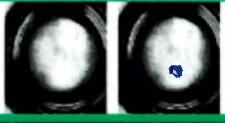
Blue overlay: remaining gap. Cropped from the manufacturer’s study extract.
Irritation and cytotoxicity assessments support the manufacturer’s tolerance evaluation.
ISO 10993-10 / ISO 10993-5 · as cited by the manufacturer
Microbiological preservation assessed through challenge testing, according to the manufacturer.
ISO 11930 · challenge test
Broader technology researchPublished laboratory studies
2021 / Skin cellsCeramide synthesis 2024 / Skin cellsOxidative stress 2022 / In vitroVirucidal activityIONALYS / A different approach
A familiar rinsing action.
An added ionic dimension.
01 Conventional isotonic saline
Saline flow washes the nasal passages, helping remove mucus, allergens and particles.
02 IONALYS / ADW S-100®
Active ionised water is designed to help detach particles through repulsion and charge neutralisation, before rinsing them away.
Inside
IONALYS
Active
ionised water
Seven-mineral
formulation
No traditional
preservatives

IONALYS / Who it is for
For seasonal or year-round allergic rhinitis, linked to common allergy triggers.
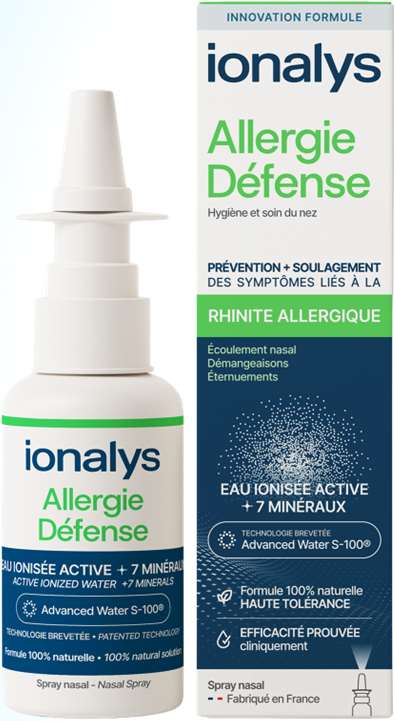
20 ml
Compact airless nasal spray
Adults 18+
Intended use and format: manufacturer’s product documentation.
IONALYS / How to use
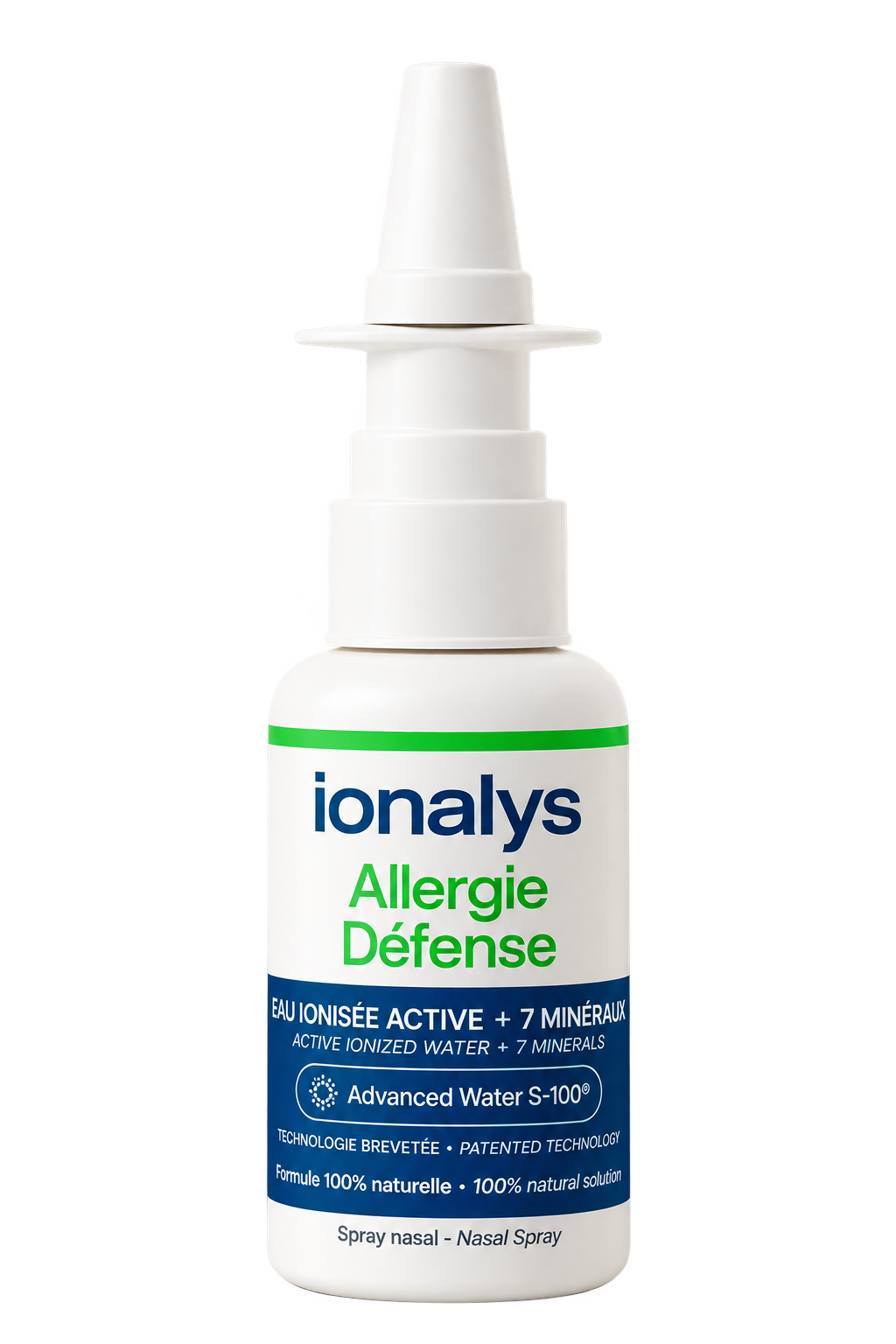
Illustrative product animation
The collaboration
Shortcut MEA × P&B Group / Laboratoires M. Richard
Shortcut MEA supports the export development of IONALYS / ADW S-100® across selected markets in the Middle East and Africa.
Our mandate
Prioritise opportunities and shape the route to market.
Identify, assess and engage distributors, then support commercial alignment.
Coordinate market entry and launch planning with P&B / Laboratoires M. Richard and appointed local partners.
Market focus Kingdom of Saudi Arabia

The market opportunity
for IONALYS.
Saudi Arabia / Allergic rhinitis
Published Saudi evidence shows a substantial burden of nasal allergy, with higher pooled estimates in adults.
Approximately 1 in 5
21.2%1
Pooled allergic rhinitis prevalence
across the included Saudi populations
All ages · 95% CI 12.8–33.1%

The impact of symptoms
61.5%2
reported moderate2024 ARSIA online survey · 262 respondents with self-reported AR; 95.4% aged 18+. These are proportions among respondents with AR, not population prevalence.
A focused review of Saudi publications, checked 23 October 2026. Local surveys, pooled estimates, symptom screens and reports of a previous diagnosis measure different things. They should not be combined into a trend or extrapolated to a national patient count.
16 articles; 31,990 participants overall. The prevalence analysis pooled 15 studies: 21.2% (95% CI 12.8–33.1%; I² 99.74%). Adult subgroup: 31.1% (11.6–60.9%; 5 studies). Urban and rural subgroup estimates were 38.4% and 13.0%; they are not adjusted comparisons.
Reported pooled triggers included perfume 36.8%, dust 27.3%, air conditioning 23.4% and weather/temperature changes 17.8%. Pooled symptom estimates included sneezing 24.6%, runny nose 22.2% and congestion 22.0%. Study populations and denominators vary. Validated-tool studies estimated 16.2%, versus 35.1% for self-developed tools, illustrating the importance of measurement.
Mixed ages and methods, with very high between-study heterogeneity. The pooled figure is not a representative national survey.
Journal of Asthma and Allergy · DOI 10.2147/JAA.S391142 ↗262 respondents who already reported AR; convenience sample, February 2024. 61.5% reported moderate/severe symptoms; 53.4% continuous symptoms; 43.5% no medication. Antiallergic spray alone: 23.3%; antihistamine alone: 19.1%; both: 14.1%. The sample included 250 adults and 12 people under 18.
Describes people with self-reported AR; it cannot estimate AR prevalence in the Saudi population or establish why people did not use medication.
Cureus · DOI 10.7759/cureus.76423 ↗13.5% reported diagnosed allergic rhinitis in an online survey of 850 residents aged 18+, September–December 2020. Any respiratory allergy was reported by 28.8%; that broader figure includes conditions other than AR.
Regional, self-reported diagnosis; internet survey recruitment limits generalisability.
PLOS ONE · DOI 10.1371/journal.pone.0253558 ↗30.2% had symptoms used as a proxy for AR in the preceding 12 months (95% CI 27.3–33.2%); 290 of 960 adults aged 20+, recruited at five primary healthcare centres. An adapted Arabic ISAAC questionnaire was used.
Regional healthcare-attendee sample. The figure shown follows the abstract and results; the discussion contains an inconsistent 36.1% value.
World Family Medicine · 2020;18(5):20–25 ↗37% of 650 respondents were reported to have AR in this cross-sectional questionnaire study. Nasal blockage, sneezing, runny nose, headache and nasal itching were common symptoms; the study also examined quality of life.
A local survey estimate; it should not be treated as national prevalence.
Medical Science · 2023;27:e262ms3083 ↗54.3% (219/403) were reported to have AR among adults aged 18+, recruited voluntarily through social media from November 2024 to 1 January 2025. Adequate knowledge was reported for 78.4%; poor/inappropriate practices for 54.1% of the full sample.
A voluntary local online sample; the estimate is not nationally representative.
IJMDC · DOI 10.24911/IJMDC.51-1736007198 ↗24.9% (71/285 adults) reported ever receiving an AR diagnosis from a medical professional. Survey responses were collected in Al-Kharj between May 2024 and March 2025.
A local, retrospective self-report of diagnosis; this differs from current symptom prevalence.
Asian Journal of Pharmaceutics · DOI 10.22377/ajp.v19i2.6464 ↗Online questionnaire study of 400 adults. Reported symptoms included sneezing 71.8%, runny nose 69.0% and blocked nose 69.2%. House dust, perfumes and dust mites were reported triggers.
These are individual symptom frequencies in the study sample, not a single confirmed AR prevalence estimate.
IJMDC · DOI 10.24911/IJMDC.51-1762083481 ↗Of 3,458 online respondents, 2,849 (82.4%) reported at least one specified nasal/ocular symptom without cold or flu. Among the symptomatic group, dust was reported as the leading trigger (74%); 46% had a persistent pattern.
Convenience recruitment and a broad symptom screen; 82.4% is not a clinically confirmed national prevalence estimate. The paper contains inconsistent moderate/severe symptom figures, so that comparison is not used here.
PLOS ONE · DOI 10.1371/journal.pone.0217182 ↗Multistage school sampling across 20 health regions. In the reported analyses, current rhinitis symptoms affected 14.3% of children aged 6–7 and 30.3% of adolescents aged 13–14; current rhinoconjunctivitis affected 5.6% and 14.0%, respectively. The abstract reports 3,614 children and 4,068 adolescents.
Different symptom definitions yield different estimates. Included for epidemiological context only: IONALYS is intended for adults aged 18+.
World Allergy Organization Journal · 2023;16:100824 ↗Research interpretation: the studies support a meaningful adult nasal-allergy care need. They do not establish demand for a specific brand, a national patient total, or IONALYS treatment effects. Pregnancy rhinitis and sinusitis are separate conditions and are excluded from these prevalence figures.
Saudi Arabia / Market size & growth
Saudi nasal sprays
Prescription + OTC
Figures are reproduced from the supplied Global Market Insights workbook, Excel - Nasal Spray Market Report, 2025 - 2034 (1)(1).xlsx, “Middle East and Africa” tab, Saudi Arabia country-value row 15. The accompanying report identifies 2024 as its base year and 2025–2034 as its forecast period.
The 2026 value is from H15, the 2034 value from P15, and the published CAGR from Q15. Values are displayed to one decimal place. The curve uses every annual workbook value, with a zero baseline.
This is the total nasal spray category across prescription and OTC products. It is broader than the IONALYS addressable segment.
| Year | Market value | Study classification |
|---|---|---|
| 2021 | 180.7 | Historical estimate |
| 2022 | 190.1 | Historical estimate |
| 2023 | 200.2 | Historical estimate |
| 2024 | 211.3 | Historical estimate |
| 2025 | 223.5 | Publisher forecast |
| 2026 | 236.6 | Publisher forecast |
| 2027 | 251.4 | Publisher forecast |
| 2028 | 267.7 | Publisher forecast |
| 2029 | 286.3 | Publisher forecast |
| 2030 | 307.5 | Publisher forecast |
| 2031 | 330.8 | Publisher forecast |
| 2032 | 356.5 | Publisher forecast |
| 2033 | 384.5 | Publisher forecast |
| 2034 | 415.8 | Publisher forecast |
Saudi Arabia / Market fit
2026 publisher forecast
Share of total nasal spray market value
45.6%
USD 107.8 million
Allergic & non-allergic rhinitis
IONALYS focuses on allergic rhinitis.
64.3%
USD 152.2 million
Adult nasal spray market
IONALYS is intended for adults aged 18+.
44.7%
USD 105.6 million
Over-the-counter nasal sprays
A pharmacy self-care opportunity to assess.
A focused proposition
for adult allergy care.
Advanced ADW S-100 Water TechnologyThe supplied study segments the market separately by application, patient type and access type. The figures shown are independent shares, calculated as each segment’s forecast 2026 revenue divided by the total Saudi nasal spray forecast of USD 236.6 million.
The rhinitis category includes both allergic and non-allergic rhinitis. The manufacturer describes IONALYS for allergic rhinitis in adults aged 18 and over. The OTC figure describes the study’s market category; it does not establish IONALYS’s Saudi classification.
These shares are not added or multiplied to estimate a combined segment. The study does not provide the overlap of adult, allergic-rhinitis and OTC sales.
| Study segment | Value | Share | Cell |
|---|---|---|---|
| Allergic and non-allergic rhinitis | 107.8 | 45.6% | H175 |
| Adults | 152.2 | 64.3% | H183 |
| Over the counter (OTC) | 105.6 | 44.7% | H192 |
Source: Excel - Nasal Spray Market Report, 2025 - 2034 (1)(1).xlsx, “Middle East and Africa” tab. Segment cells shown above; total in H15. Percentages are calculated from the full-precision source values and rounded to one decimal place.
Saudi Arabia / Route to market
A retail and digital route
to reach Saudi consumers.
2026 publisher forecast · Share of market value
Saudi Arabia's total nasal spray market by distribution channel. Retail pharmacies: 46.8%, USD 110.8 million. Online pharmacies: 15.3%, USD 36.2 million. Hospital pharmacies: 37.8%, USD 89.5 million. Percentages are rounded; the chart uses the full-precision source values.
USD 110.8 million
USD 36.2 million
USD 89.5 million
62.2%
Retail + online pharmaciesLaunch recommendation
The chart uses the study’s 2026 Saudi distribution-channel forecasts. Each share is calculated by dividing channel revenue by the total forecast of USD 236.6 million. Segment widths use full-precision values.
Retail and online pharmacies are distinct channels in this breakdown. Together they represent USD 147.1 million, or 62.2% of total market value: (H205 + H207) ÷ H208 × 100.
The scope includes all nasal sprays, both prescription and OTC. This is a channel view, not an estimate of IONALYS sales or its addressable segment. The launch recommendation is our interpretation of the study; local product classification and registration remain to be confirmed.
| Study channel | Value | Share | Cell |
|---|---|---|---|
| Retail pharmacies | 110.8 | 46.8% | H205 |
| Online pharmacies | 36.2 | 15.3% | H207 |
| Hospital pharmacies | 89.5 | 37.8% | H206 |
Source: Excel - Nasal Spray Market Report, 2025 - 2034 (1)(1).xlsx, “Middle East and Africa” tab. Segment cells shown above; total in H208. Percentages are calculated from full-precision source values and rounded to one decimal place. The bar is reordered to place retail and online pharmacies together.
Saudi Arabia / The Nahdi opportunity
A partnership proposal for Nahdi.
Nahdi / The partner fit
Reach. Distribution. Expertise.
A platform to introduce and build brands.
1,217
Reported pharmacy network
30.2%
Online share of total revenue
18.9%
Private-label share of total revenue
Company-reported indicators · H1 2026
Automated fulfilment and temperature-controlled handling in Jeddah, supporting Nahdi’s pharmacy and online delivery network.
units delivered by Nahdi in 2024
Company-reported volume · all categories
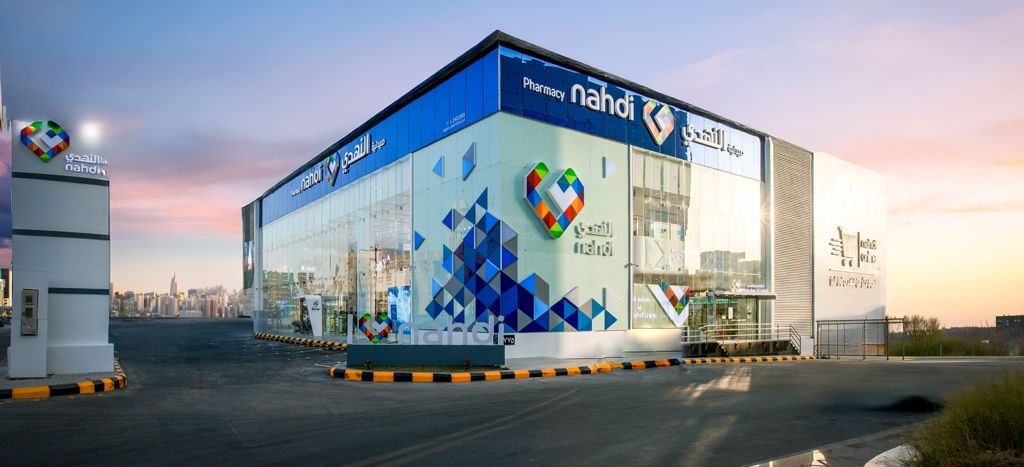
Pharmacy retail, digital engagement and private-label development, with 12 local medicine manufacturing partners in 2025.
years of pharmacy experience
As described in Nahdi’s company profile
03 / International brand experience
Weight management
Launch confirmed · January 2023
OptiBiotix confirmed launch through Nahdi after Saudi registration.
Source 05Weight management
Agreement announced · December 2021
Included in OptiBiotix’s exclusive Saudi supply agreement with Nahdi.
Source 06Beauty & personal care
Appointment announced · February 2018
Nahdi appointed exclusive distributor in Saudi Arabia.
Source 07Selected announced distribution partnerships · Historical examples, with announcement or launch dates shown.
The fit for IONALYS
The three headline figures are reported by Nahdi for H1 2026. The pharmacy count is the company’s reported retail footprint; no Saudi-only country split or IONALYS listing commitment is inferred. The online and private-label shares concern total company revenue, not nasal-care category sales or margins.
The 222 million units are Nahdi’s reported deliveries in 2024 across its business, not IMDAD’s stated capacity or a measure of independent pharmacies served. The 39+ years description is from Nahdi’s company profile; the 12 local medicine manufacturing partnerships relate to 2025.
GoFigure, SlimBiome® Medical and Joelle Paris are dated examples of announced distributor relationships. GoFigure’s January 2023 launch is separately confirmed by its manufacturer. The 2021 SlimBiome® Medical agreement is not presented as proof of a subsequent launch. The historical announcements do not establish present exclusive rights, current sales volumes or a general wholesale network outside Nahdi.
Our interpretation is that retail reach, distribution infrastructure, pharmacy expertise and brand experience provide a basis to discuss original IONALYS distribution and a Nahdi own-brand extension. Commercial terms, the scope of distribution and local product registration remain to be agreed.
Published 29 July 2026, page 3: 1,217-store footprint; online 30.2% and private label 18.9% of total revenue. Corroborated by the Q2 2026 factsheet ↗.
Printed page 22 (PDF page 12) reports 222 million units delivered in 2024. This is a historical company delivery figure.
The automation supplier describes automated fulfilment, intelligent logistics software and temperature-controlled systems at IMDAD. Facility capacity figures are not used as actual deliveries.
Describes over 39 years of experience, pharmacy retail, omnichannel operations and private-label development. Its 2025 highlights identify partnerships with 12 local medicine manufacturers. The page contains differing distribution-centre counts, so no centre count is used. The pharmacy image is from Nahdi’s investor website ↗. Capabilities and brand examples checked 24 October 2026.
Exclusive distributor named by OptiBiotix in its 2022 results, published 28 June 2023.
A range named in the announced agreement; subsequent launch or current exclusivity is not inferred.
Historical appointment reported in an Arab News sponsored corporate announcement dated 27 February 2018. Nahdi Online listing ↗ also confirms the brand is retailed; it does not independently establish current exclusive rights.
Nahdi / The range opportunity
Current offer
+ a proposed complement
Existing Nahdi products
Three listed formats
100ml
SAR 56.00
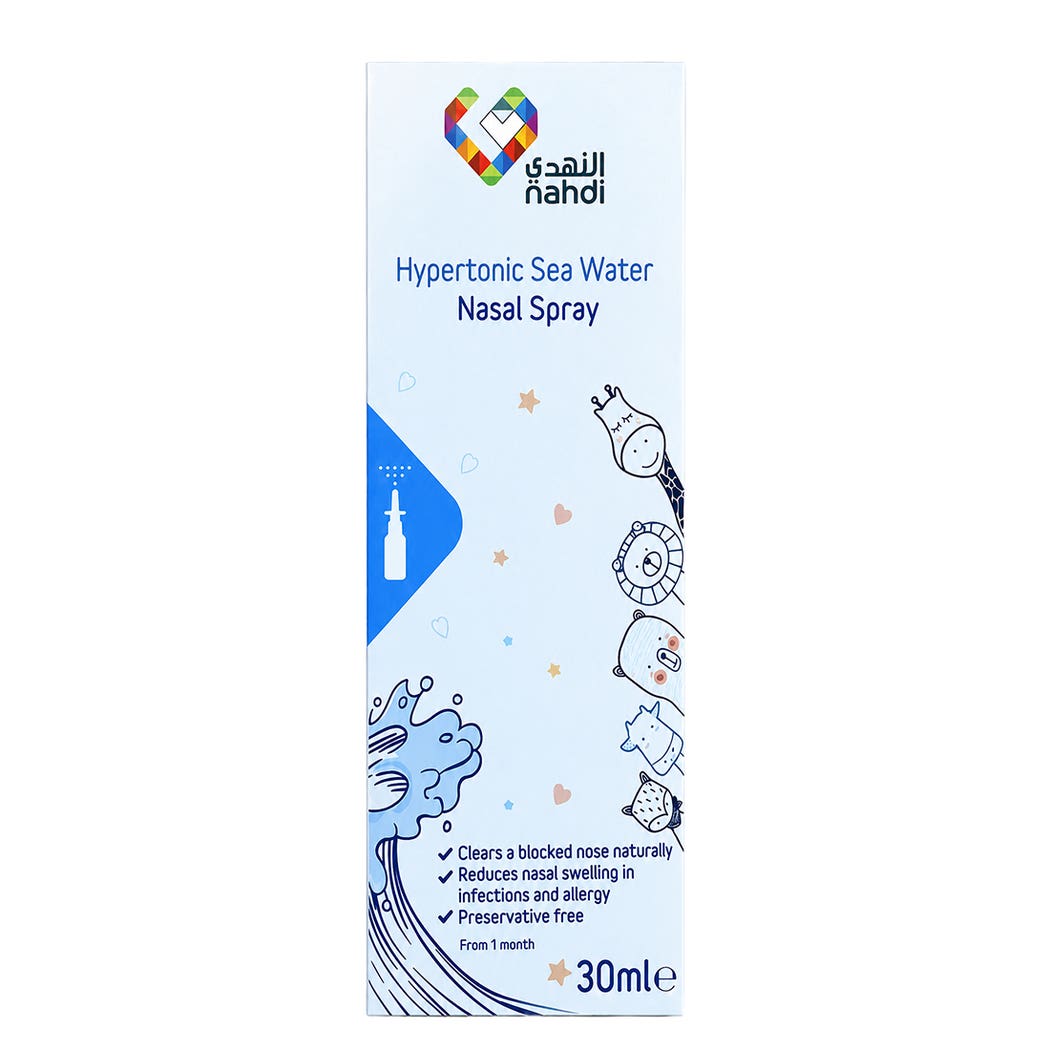
30ml
SAR 51.00
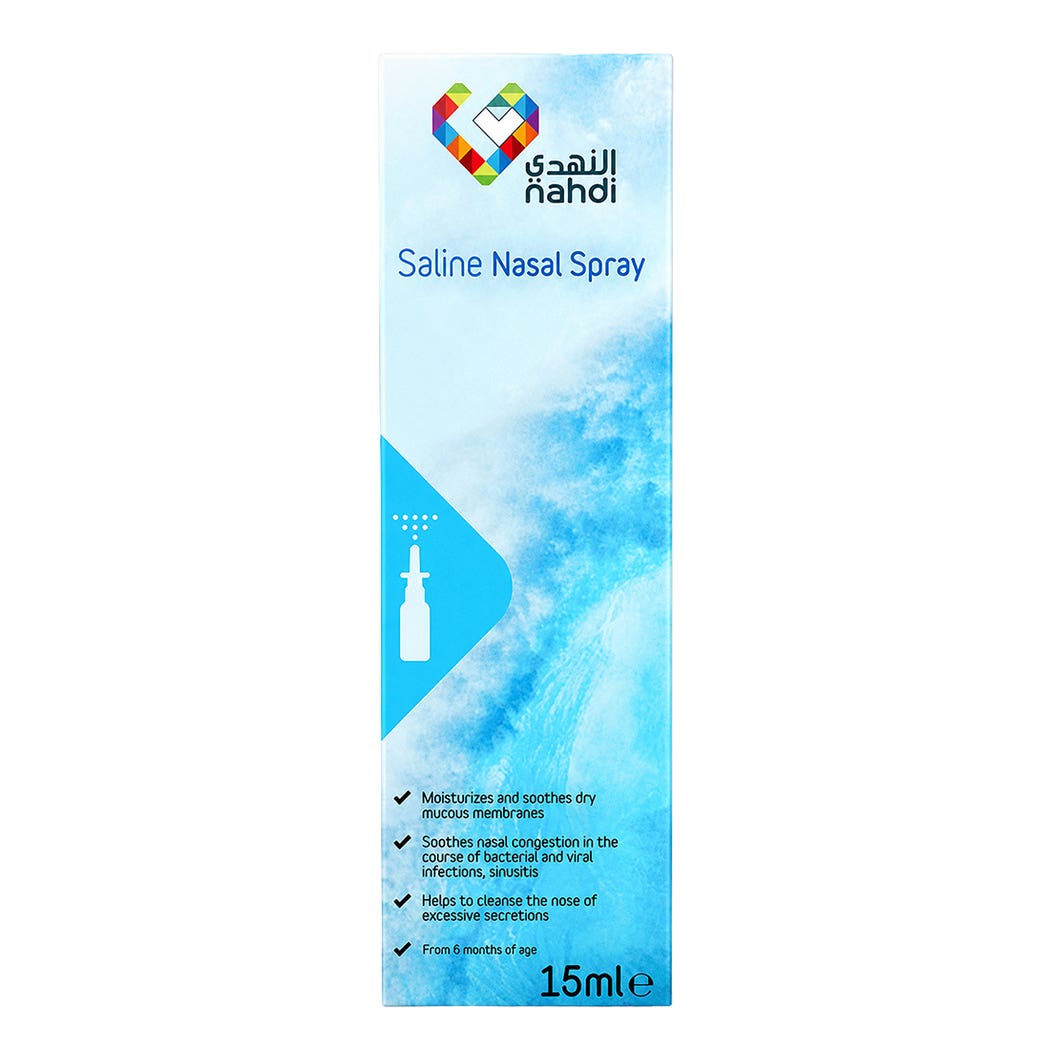
15ml
SAR 39.00
The opportunity
This view covers the three Nahdi SKUs supplied for the proposal, rather than an exhaustive audit of Nahdi’s nasal-care assortment. Product titles, formats, pack images and listed prices are taken from the linked Saudi product pages. Prices were checked on 26 October 2026 and may change; multi-buy promotions are not incorporated.
EUR and USD figures convert the listed Saudi unit price; they are not retail prices in Europe or the United States. USD = SAR ÷ 3.75. EUR = USD ÷ 1.1193. Calculations use full precision, then round to two decimals. The ECB reference is dated 23 October 2026, the latest available at verification.
ECB · EUR 1 = USD 1.1193 ↗
Saudi Central Bank · SAR 3.75 per USD ↗
Nahdi already describes allergy-related congestion uses for its hypertonic products. The proposed complement is the manufacturer-described ADW S-100® active-water technology and its adult allergic-rhinitis positioning. The slide does not claim that Nahdi has no allergy offer or establish a head-to-head efficacy ranking.
IONALYS is shown in its current packaging. A Nahdi own-brand version is a proposal requiring agreed artwork, product claims, commercial terms and local registration.
| Product / source | SAR | EUR | USD |
|---|---|---|---|
| Hypertonic sea water · 100 ml ↗SKU 101959771 | 56.00 | 13.34 | 14.93 |
| Hypertonic sea water · 30 ml ↗SKU 101959780 | 51.00 | 12.15 | 13.60 |
| Saline nasal spray · 15 ml ↗SKU 101959798 | 39.00 | 9.29 | 10.40 |
Release dated 26 November 2025, pages 1–3. Describes a 20 ml ADW S-100® nasal spray for adult allergic-rhinitis symptoms and European Class IIa CE marking under MDR. European certification does not establish Saudi approval.
Nahdi / The partnership proposal
Branded distribution
Introduce the original brand through Nahdi’s pharmacies and online platform.
Shared technology
ADW S-100®Active ionised waterNahdi own brand

Develop a Nahdi-branded ADW S-100® version to complement its nasal-care range.
Proposed models for discussion. Final artwork, claims, local registration and commercial terms to agree.
Shape the partnership01 The IONALYS distribution model
What Nahdi sells
Nahdi’s proposed role
Proposed partner support
The commercial logic
To agree together
02 The Nahdi own-brand model
01 / Branding
02 / Technology
03 / Partnership
The commercial logic
To agree together
04 The margin dynamics
From the supplier’s premises to the Saudi shelf. How cost builds up — and who retains the gross profit.
Agreed finished-product price at the supplier’s named premises.
Collection, freight, delivery, clearance and applicable import charges.
Cost of the unit at the agreed Saudi warehouse.
Include insurance if arranged, applicable duty and non-recoverable charges. Exclude recoverable import VAT. EXW is the supply price paid to the manufacturer, including its commercial return.
Model 01
Price chain for sales to other pharmacies.
Agreed price for the finished IONALYS product.
EXW plus inbound logistics and import charges.
Nahdi’s selling price to other pharmacies.
The other pharmacy’s retail selling price.
Who retains the gross profit?
When IONALYS is sold through Nahdi’s own channels: Nahdi retains net retail sales minus landed cost. Internal transfers create no extra group profit.
Model 02
Price chain through Nahdi pharmacies and online.
Agreed price for the finished Nahdi-branded product.
EXW plus inbound logistics and import charges.
Nahdi’s retail selling price through its own channels.
Who retains the gross profit?
The full landed-to-net-retail spread stays within Nahdi on its own-channel sales, before marketing and operating costs.
The manufacturer is paid through the agreed own-brand EXW supply price. The potential advantage comes from negotiated supply economics and ownership of the Nahdi brand.
Arrows show the commercial sequence. Spacing does not represent a price or margin.
A common price basis
RSP = retail selling price. All prices illustrated above exclude applicable VAT. Net selling prices reflect discounts, returns and agreed deductions. Use Nahdi’s wholesale price for external accounts, or its net retail sales for its own channels.
At a comparable net RSP, the agreed landed cost determines the gross profit retained on Nahdi’s own-channel sales. Marketing and operating costs then determine the contribution.
EXW means Ex Works at a named place under Incoterms® 2020. The supplier makes the finished product available there. The buyer generally arranges collection, loading, export formalities, transport and import clearance. Insurance is included in this cost build-up only if purchased; EXW does not itself require either party to insure.
The landed-cost boundary used here is delivery to the agreed Saudi warehouse. Include directly attributable inbound costs, applicable duties and non-recoverable taxes, after purchase discounts or rebates. Recoverable VAT is a cash-flow item rather than product cost. No tax, duty, currency conversion or supply-price rate has been assumed.
RSP is the retail selling price. The diagram uses a VAT-exclusive basis. If a shelf price is VAT-inclusive, remove the applicable VAT before comparing it with costs. Net sales also reflect actual discounts, returns and deductions.
For external wholesale sales, Nahdi’s revenue ends at the net wholesale selling price; the independent retailer earns the subsequent retail spread. For sales through Nahdi’s own pharmacies or online channel, use net retail sales. Internal transfers do not add consolidated revenue or profit.
The own-brand route illustrates sales through Nahdi’s own channels. It does not claim the branded model must use an external retailer: the visible own-channel note shows that Nahdi also retains the full landed-to-net-retail spread when retailing IONALYS itself. An own-brand sale to an external retailer would likewise leave that retailer its retail economics.
Both EXW prices are negotiated finished-product supply prices, not bare manufacturing costs. The manufacturer’s economics and any agreed technology, development, packaging or other supply charges still apply. There is no automatic higher margin or transfer of technology ownership. Any supply charges must be included once, in the agreed cost structure.
This is a simplified commercial product-margin bridge, before marketing, operating costs and other adjustments. Registration, artwork, development, storage, outbound fulfilment, stock provisions and other costs must be assessed and allocated under the agreed structure and accounting policy; they are not all automatically import costs.
The Nahdi pack is illustrative. Product specifications, claims, local registration and supply terms require agreement. Price levels and margin percentages will be developed later from agreed inputs.
ICC Academy · EXW responsibilities ↗
IFRS Foundation · IAS 2 overview ↗
AASB 102, paragraph 11 · Purchase-cost components ↗
The cost definitions are informed by these references. The channel routes and proposed margin allocation are our commercial illustration for discussion; they are not published Nahdi supply terms.
05 From ambition to activation
Four growth drivers.
One coordinated commercial approach.
For IONALYS and the proposed Nahdi own-brand extension.
Explain the technology, supported claims and the relevant adult customer.
Both modelsGive IONALYS a clear role on shelf, alongside the proposed Nahdi range extension.
Both modelsConnect product discovery, educational content and conversion through Nahdi Online.
Both modelsExtend IONALYS into agreed Saudi pharmacy accounts, supported by dependable availability.
IONALYS distributionFour complementary drivers, designed to work together.
Reliable supply supports every step.
06 The proposed partnership
Three complementary roles.
One coordinated approach.
Proposed responsibilities for discussion.
P&B Group / Laboratoires M. Richard
Shortcut MEA
Nahdi
07 The next chapter
Explore interest in both
business models.
Distribution, own-brand development
and supply terms.
Product requirements, registration
and commercial readiness.
A Supporting detail
Product references, scientific evidence and the assumptions behind the Saudi opportunity.
IONALYS is presented in the supplied manufacturer documentation as an airless 20 ml nasal spray for adults with allergic rhinitis, based on ADW S-100 ionised water technology.
Manufacturer release & CE-marking summary ↗Product certification in the presentation ↑Manufacturer credentials & published sources ↑
Source: the supplied Global Market Insights workbook, Excel - Nasal Spray Market Report, 2025 - 2034 (1)(1).xlsx, “Middle East and Africa” sheet, Saudi country-value row 15. Base year: 2024. Publisher forecast period: 2025–2034.
The category includes prescription and OTC nasal sprays. It is broader than the IONALYS addressable segment. Values are shown to one decimal place from the full-precision supplied workbook. This presentation uses that supplied edition.
| Year | Market value | Study classification |
|---|---|---|
| 2021 | 180.7 | Historical estimate |
| 2022 | 190.1 | Historical estimate |
| 2023 | 200.2 | Historical estimate |
| 2024 | 211.3 | Historical estimate |
| 2025 | 223.5 | Publisher forecast |
| 2026 | 236.6 | Publisher forecast |
| 2027 | 251.4 | Publisher forecast |
| 2028 | 267.7 | Publisher forecast |
| 2029 | 286.3 | Publisher forecast |
| 2030 | 307.5 | Publisher forecast |
| 2031 | 330.8 | Publisher forecast |
| 2032 | 356.5 | Publisher forecast |
| 2033 | 384.5 | Publisher forecast |
| 2034 | 415.8 | Publisher forecast |
Rhinitis publications & prevalence sources ↑Segment definitions & calculations ↑Distribution-channel values & calculations ↑
The combined ambition is 10% of Saudi category value by 2032, with 2028 as the first full commercial year. The annual path and allocation between the models are proposed planning targets, not a validated sales forecast.
| Year | IONALYS | Nahdi own brand | Combined | Value USD m |
|---|---|---|---|---|
| 2028 / Y1 | 0.8% | 1.2% | 2.0% | 5.4 |
| 2029 / Y2 | 1.9% | 2.1% | 4.0% | 11.5 |
| 2030 / Y3 | 3.3% | 2.7% | 6.0% | 18.4 |
| 2031 / Y4 | 4.8% | 3.2% | 8.0% | 26.5 |
| 2032 / Y5 | 6.0% | 4.0% | 10.0% | 35.6 |
Each year’s illustrated value equals the publisher’s Saudi market forecast multiplied by the combined target share. It is not Nahdi net revenue or profit. Both models must use the same valuation basis; count each sale once.
Current competitor sales shares and Nahdi’s Saudi nasal-care share remain to be validated with local category data. Neither brand-usage surveys nor the total market forecast establish competitor sales shares.
Prices and margin rates remain to be agreed. Landed cost includes EXW supply price and agreed directly attributable inbound costs, applicable duty and non-recoverable charges. Recoverable VAT is excluded. Own-channel and external-wholesale economics must be assessed separately.
Five-year ambition & full assumptions ↑Cost definitions, channel economics & accounting sources ↑Proposed growth drivers ↑
IONALYS / Evidence appendix
Product-specific testing and selected publications on the wider water technology.
Manufacturer release, 26 November 2025. References SPRA (10 October 2023) and the Epithelix MucilAir™ Pool nasal epithelial model (11 October 2024).
Read manufacturer release ↗Integrity, mucin and scratch-assay findings for the nasal epithelial model. The supplied slides are an excerpt, rather than the full study report.
View supplied extract (French) ↗Supplied manufacturer slides cite ISO 11930 challenge testing. The complete test report was not included in the supplied extract.
View supplied extract (French) ↗These laboratory studies concern skin cells or virus inactivation. They are separate from the IONALYS human allergic-rhinitis trial.
Drug Discoveries & Therapeutics. 2021;15(5):248–253. DOI: 10.5582/ddt.2021.01091.
Read publication ↗Drug Discoveries & Therapeutics. 2024;18(5):303–307. DOI: 10.5582/ddt.2024.01054.
Read publication ↗Advances in Virology. 2022;5995775. DOI: 10.1155/2022/5995775. Laboratory findings; no IONALYS clinical antiviral indication is established by this study.
Read publication ↗